Professional Hardscaping in Westlake Hills TX | Outdoor Renovations
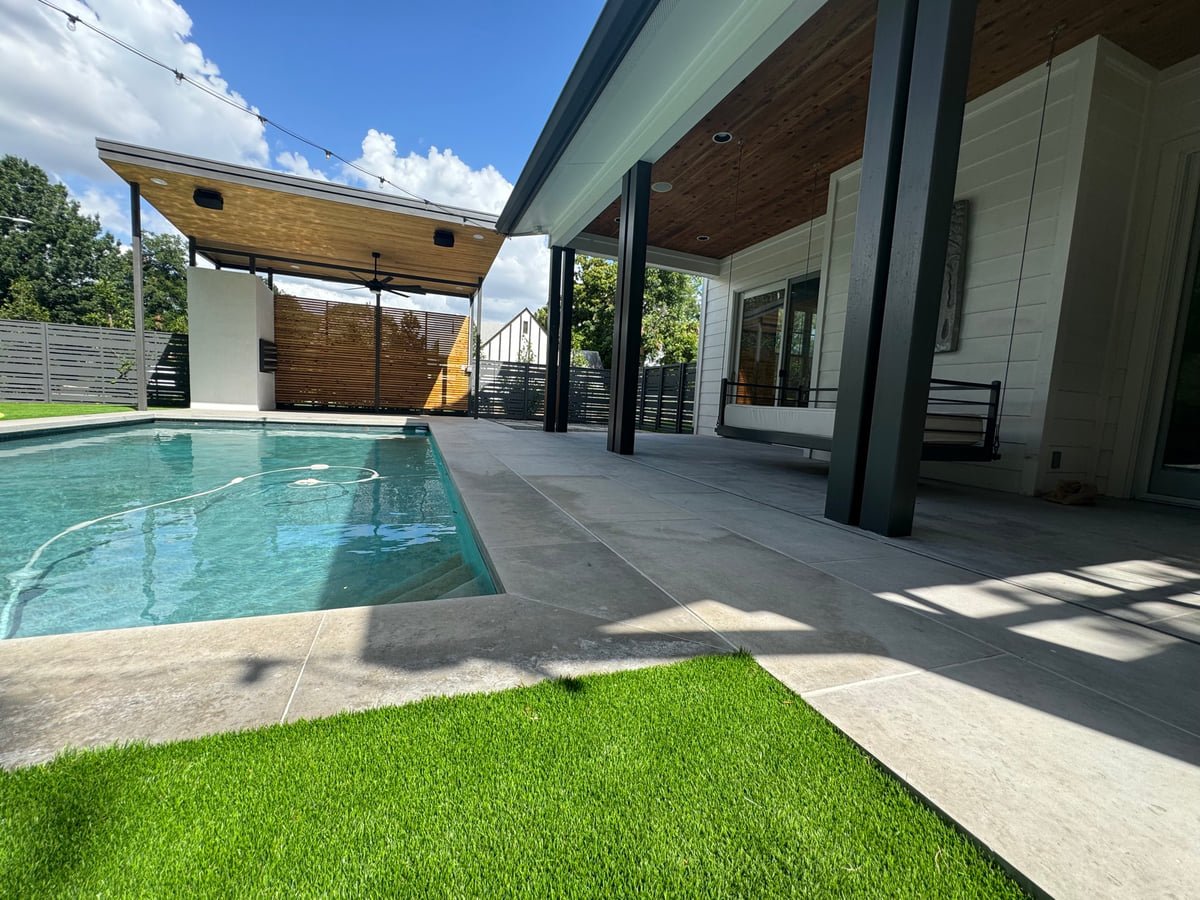
When severe thunderstorms roll through Westlake Hills this summer, your hardscaping needs to stand strong. Professional hardscaping in Westlake Hills creates outdoor living spaces that handle everything from flash floods to 105°F heat while adding substantial value to your property. Outdoor Renovations has completed over 200 projects across Austin Metro and Central Texas, specializing in storm-resistant hardscape designs that work with the area's unique limestone terrain and expansive clay soils.
Hardscaping Guide for Westlake Hills Homeowners Professional hardscaping includes patios, retaining walls, walkways, outdoor kitchens, and fire pits built with premium materials. Summer storms make proper drainage and engineering critical for Westlake Hills properties. Expert installation prevents erosion, handles thermal expansion, and creates durable outdoor spaces that increase property value by 100-200% while withstanding Central Texas weather extremes.
Why Summer Storms Make Professional Hardscaping Essential
This week's forecast shows exactly why Westlake Hills homeowners need engineered hardscaping solutions. With five days of precipitation and temperatures swinging from 73°F to 94°F, poorly installed patios and retaining walls face their biggest test.
The combination of saturated clay soils and limestone substrata creates unique challenges. When Travis County's black clay expands from rainfall, it exerts tremendous pressure on hardscape structures. Meanwhile, the underlying limestone provides drainage channels that can cause sudden settling if not properly addressed.
Kyle Stoutenger, who has designed hardscape solutions across Austin Metro for over 16 years, explains: "Most DIY hardscaping fails during the first major storm. Westlake Hills properties need engineered drainage, proper base preparation, and materials that handle both thermal expansion and clay movement."
Key Takeaway: Summer storms reveal the difference between professional and amateur hardscaping. Properly engineered structures handle heavy rainfall and temperature swings, while poorly built features suffer damage that costs more to repair than professional installation.
Understanding Westlake Hills' Unique Hardscaping Challenges
Westlake Hills sits at the intersection of Hill Country limestone and Austin's expansive clay soils. This creates specific engineering requirements that generic hardscaping approaches can't handle.
The limestone provides excellent drainage but can create voids as it weathers. Properties built on limestone shelves need hardscaping that bridges these natural gaps without settling. Clay soils expand up to 10% when wet, then shrink dramatically during droughts. This cycle destroys rigid materials and poorly designed structures.
Temperature extremes add another layer of complexity. Flagstone can reach 140°F in direct sunlight, while concrete experiences thermal expansion that cracks poorly designed joints. Materials must handle these temperature swings while maintaining structural integrity.
Soil and Drainage Considerations
Westlake Hills properties typically feature 6-18 inches of clay topsoil over fractured limestone. This combination creates drainage challenges that require specific solutions:
- Perched water tables form when clay sits on impermeable limestone layers
- Preferential flow paths develop through limestone fractures, causing uneven settling
- Seasonal movement occurs as clay expands and contracts with moisture changes
Professional hardscaping addresses these issues through proper base preparation, drainage design, and material selection. We install aggregate bases that bridge soil transitions and include drainage systems that handle both surface runoff and subsurface flow.
Professional Hardscaping Materials for Central Texas
Material selection determines long-term hardscape performance in Westlake Hills' challenging environment. Natural stone outperforms manufactured materials for several critical reasons.
Flagstone and Limestone
Texas flagstone and local limestone integrate naturally with the area's geology. These materials handle thermal expansion through natural joint patterns and age beautifully in Central Texas conditions. Flagstone provides slip resistance when wet and stays cooler than concrete or manufactured pavers.
Kyle Stoutenger's experience shows flagstone installations lasting 30+ years with minimal maintenance when properly installed. The key lies in using materials from local quarries that match the area's limestone composition and thermal characteristics.
Travertine and Natural Stone Options
Travertine offers premium aesthetics with excellent heat dissipation properties. Its porous structure stays 15-20°F cooler than concrete in direct sunlight, making it ideal for pool decks and high-use areas. The material's natural variation complements Westlake Hills' organic landscapes while providing slip resistance.
For retaining walls, we use chopped limestone or flagstone that matches existing geological features. This approach creates structures that look like natural rock outcroppings while providing engineered stability.
Concrete and Manufactured Alternatives
While natural stone provides the best long-term performance, properly designed concrete installations can work in specific applications. We use fiber-reinforced concrete with expansion joints every 8-10 feet to handle thermal movement. Stamped concrete requires careful attention to curing temperatures and joint placement.
Manufactured pavers work for utility areas but lack the thermal performance and aesthetic integration of natural materials. They're best suited for service areas where function outweighs form.
Key Takeaway: Material selection drives long-term hardscape performance. Natural stone costs 20-30% more upfront but provides superior durability, thermal performance, and resale value compared to manufactured alternatives.
Engineering Storm-Resistant Retaining Walls
Westlake Hills' steep terrain and unstable soils make retaining walls critical infrastructure rather than decorative features. Professional retaining wall design addresses multiple failure modes that DIY approaches often miss.
Structural Design Principles
Retaining walls must handle lateral earth pressure, surcharge loads from buildings or driveways, and hydrostatic pressure from groundwater. In Westlake Hills, expansive clay creates additional pressures that standard calculations don't account for.
We design walls with 20% additional capacity to handle clay expansion forces. This includes deeper foundations that extend below the active clay zone and robust drainage systems that prevent hydrostatic buildup.
Drainage Integration
Every retaining wall requires a comprehensive drainage system that handles both surface runoff and subsurface water. Our drainage solutions include:
- French drains behind the wall with 4-inch perforated pipe
- Weep holes every 6-8 feet at the base of the wall
- Surface drainage that directs water away from the structure
- Geotextile fabric that prevents soil migration while allowing water flow
Proper drainage eliminates the hydrostatic pressure that causes most retaining wall failures. We use clear aggregate backfill and filter fabric that maintains drainage capacity even when clay soils migrate.
Foundation and Base Preparation
Retaining wall foundations must extend below the frost line and active clay zone. In Westlake Hills, this typically means 18-24 inch foundations with compacted aggregate base extending 6 inches beyond the wall footprint.
We excavate to stable subgrade, install geogrid reinforcement for walls over 4 feet, and use stepped foundations that follow natural grade changes. This approach distributes loads evenly and prevents differential settling.
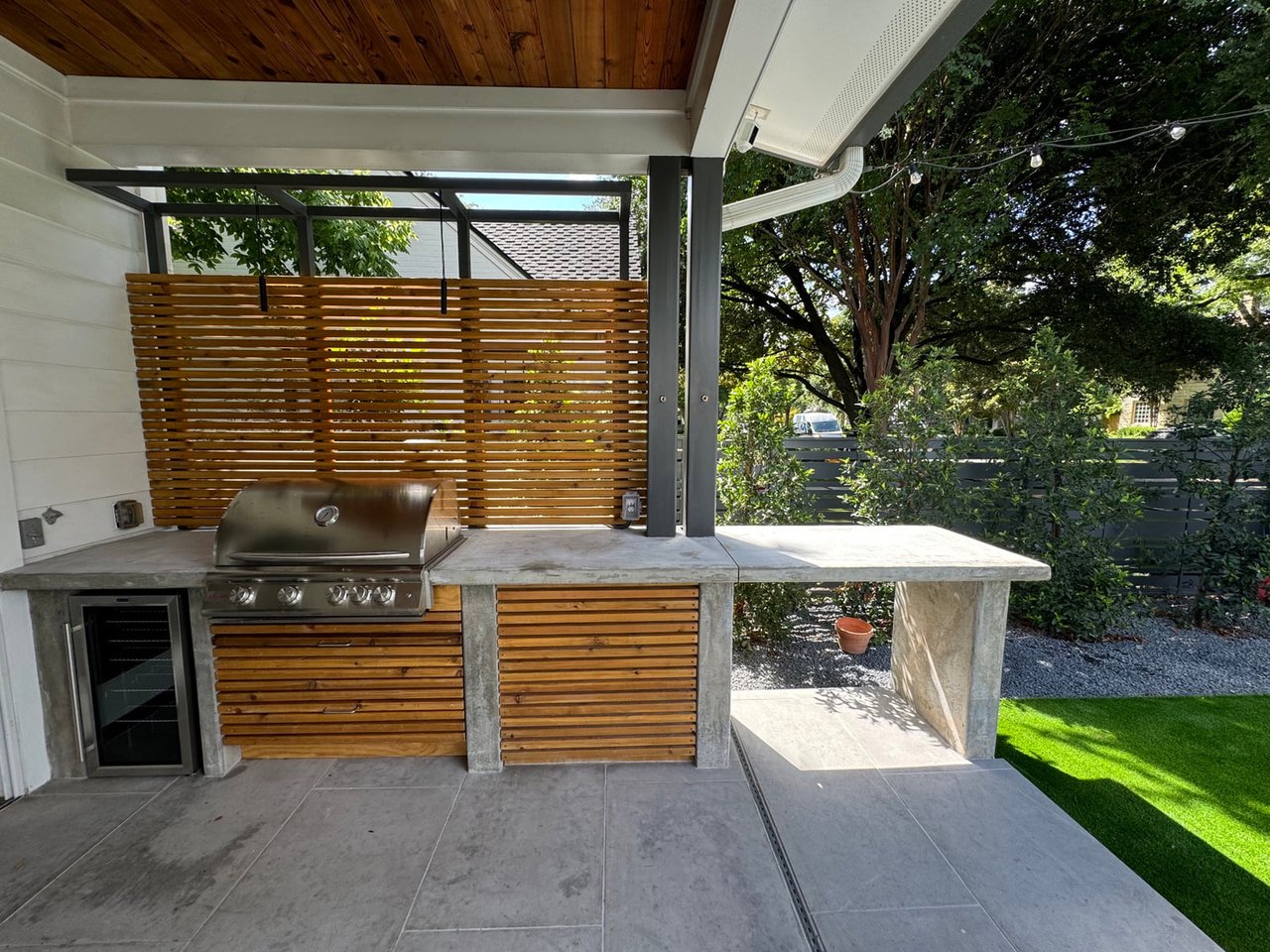
Outdoor Kitchen and Entertainment Area Design
Summer entertaining drives demand for outdoor kitchens, but Central Texas conditions require specific design approaches. Successful outdoor kitchens integrate with existing landscape design while handling heat, humidity, and severe weather.
Layout and Functionality
Outdoor kitchens need protection from prevailing south winds and summer storms while maintaining natural ventilation. We orient cooking areas to minimize smoke impact on seating areas and include overhead coverage that handles driving rain.
Counter heights follow indoor standards (36 inches for prep, 42 inches for bar seating) but use materials that handle temperature extremes. Natural stone countertops outperform concrete in heat resistance and stain resistance.
Utility Integration
Gas lines, electrical service, and water supply require professional installation and proper permitting. We coordinate with utility companies for gas service and install GFCI protection for all electrical components. Water lines include freeze protection and proper drainage to prevent standing water.
Outdoor kitchen installations require Travis County permits for gas connections and electrical work. We handle all permitting and ensure compliance with local building codes.
Material Selection for High-Heat Applications
Cooking areas generate extreme heat that destroys standard materials. We use refractory concrete around grills and fire features, with expansion joints that handle thermal cycling. Stainless steel components resist corrosion in humid conditions while providing easy maintenance.
Natural stone backsplashes handle heat and splatter better than tile or manufactured materials. We seal stone surfaces with high-temperature sealers that maintain protection despite temperature extremes.
Key Takeaway: Outdoor kitchens require specialized materials and professional utility integration. Proper design handles Texas heat while providing year-round functionality and code compliance.
Fire Pit and Gathering Space Design
Fire pits create focal points for outdoor entertaining but require careful engineering for safety and durability. Professional fire pit installation addresses fire safety, gas connections, and integration with surrounding hardscape elements.
Safety and Code Compliance
Fire pits must maintain minimum clearances from structures, property lines, and combustible materials. Austin fire codes require 10-foot clearances from buildings and 3-foot clearances from property lines for permanent installations.
We install fire-rated materials around fire features and include proper ventilation for gas-fired units. Safety shutoffs and wind guards protect against dangerous conditions while maintaining usability during typical weather.
Integration with Hardscape Design
Fire pits work best when integrated with seating walls, pathways, and landscape lighting. We design gathering spaces with multiple seating options and traffic flow that doesn't interfere with fire safety.
Natural stone seating walls provide comfortable heights (18-20 inches) with backs that encourage conversation. Custom carpentry elements like pergolas and shade structures complete the outdoor room concept.
Gas Line Installation and Permits
Permanent fire pits require professional gas line installation and Travis County permits. We size gas lines properly for BTU requirements and install manual shutoffs in accessible locations. All gas work includes pressure testing and inspection by certified professionals.
Underground gas lines require proper depth (minimum 18 inches) and tracer wire for future location. We coordinate with Texas 811 for utility marking and follow all safety protocols for excavation around existing utilities.
Pathway and Walkway Design
Well-designed pathways connect hardscape elements while handling drainage and providing safe passage during storms. Professional pathway installation addresses grade changes, surface materials, and lighting integration.
Grade and Drainage Considerations
Pathways must maintain ADA-compliant slopes (maximum 8.33%) while directing water away from structures. We design walkways with crown sections that shed water to planted areas or drainage systems.
In Westlake Hills' steep terrain, we often use stepped pathways with landings that provide rest areas and handle grade changes naturally. Each step meets building code requirements (minimum 11-inch tread, maximum 7-inch rise) while integrating with landscape features.
Surface Materials and Textures
Natural flagstone provides the best slip resistance and thermal performance for Central Texas walkways. We install flagstone with tight joints that prevent weed growth while allowing thermal expansion.
Decomposed granite paths work well for informal areas and provide permeable surfaces that handle stormwater naturally. Proper edge restraints prevent erosion while maintaining clean lines that complement formal landscape elements.
Lighting Integration
Pathway lighting ensures safe passage after dark while highlighting hardscape features. We coordinate with landscape lighting specialists to provide appropriate illumination levels without creating glare or light pollution.
LED fixtures provide energy efficiency and long life while offering various beam patterns for different applications. Transformer sizing and wire gauge calculations ensure reliable operation even during voltage fluctuations common in summer storms.
Key Takeaway: Professional pathways integrate drainage, safety, and aesthetics while handling Westlake Hills' challenging terrain. Proper design prevents erosion and provides safe passage in all weather conditions.
Maintenance and Long-Term Performance
Professional hardscaping requires minimal maintenance when properly installed, but understanding care requirements helps protect your investment. Summer storms and temperature extremes stress all outdoor materials.
Preventive Maintenance Schedules
Annual inspections identify potential issues before they become expensive problems. We check drainage systems for clogs, inspect joints for movement, and verify that expansion joints remain flexible.
Spring and fall cleaning removes debris that can trap moisture and cause staining. High-pressure washing can damage natural stone, so we recommend gentle cleaning methods that preserve surface textures.
Addressing Storm Damage
Severe storms can displace loose stones or overwhelm drainage systems. Quick response prevents minor issues from becoming major problems. We provide emergency services for storm damage and maintain relationships with suppliers for rapid material replacement.
Most storm damage results from poor drainage or inadequate base preparation. Professional installations rarely suffer structural damage, but surface elements may require occasional adjustment.
Seasonal Care Requirements
Texas heat requires specific care for different hardscape materials. Natural stone benefits from occasional sealing but shouldn't be over-sealed, which can trap moisture. Concrete surfaces may require crack sealing and joint maintenance.
Winter freeze-thaw cycles rarely affect properly installed hardscaping in Central Texas, but rapid temperature changes can cause expansion joint movement. Professional installation accounts for these movements through proper joint spacing and flexible sealants.
Investment Value and ROI
Quality hardscaping provides exceptional return on investment for Westlake Hills properties. The National Association of Landscape Professionals reports that quality landscaping delivers 100-200% return on investment, with hardscaping contributing the highest values.
Property Value Impact
Professional hardscaping extends usable outdoor space and creates entertainment areas that buyers value highly. Outdoor kitchens and fire pits typically return 70-80% of investment costs while providing immediate lifestyle benefits.
Well-designed retaining walls and drainage systems prevent costly foundation problems while creating usable space on steep lots. These functional improvements often return more than their installation cost through prevented damage and increased usable area.
Cost-Benefit Analysis
Professional installation costs 30-50% more than DIY approaches but provides superior durability and performance. Over 10-15 year lifecycles, professional hardscaping costs less per year due to reduced maintenance and replacement needs.
Insurance considerations favor professional installation with proper permits and code compliance. DIY failures can void homeowners insurance coverage and create liability issues that far exceed installation savings.
Ready to create hardscaping that handles Central Texas storms while adding value to your Westlake Hills property? Outdoor Renovations brings over 16 years of experience designing storm-resistant outdoor spaces that complement the area's natural beauty. Our licensed landscape contractor team handles everything from permits to final cleanup, ensuring your hardscape investment performs for decades. Call (512) 743-0570 to schedule your consultation and discover how professional hardscaping transforms your outdoor living experience.
Hardscaping in Westlake Hills & Central Texas
Landscaping Services Near You
Frequently Asked Questions
What hardscaping materials work best in Westlake Hills' limestone soil?
Flagstone, travertine, and decomposed granite work exceptionally well with Westlake Hills' limestone base. These materials complement the natural geology and provide excellent drainage. We avoid concrete pavers that can crack with limestone movement and recommend materials that handle thermal expansion in Texas heat.
How do you prevent erosion on steep Westlake Hills properties?
We install engineered retaining walls with proper drainage systems, including French drains and weep holes. For slopes over 3:1, we use terraced designs with multiple retention levels. Each wall includes geotextile fabric and compacted aggregate base to handle Central Texas clay expansion and heavy rainfall.
Can hardscaping be installed during summer storms?
We avoid concrete pours above 95°F and delay installation during active storms. However, summer is ideal for stone and aggregate installations. We schedule around weather patterns and use protective measures for curing concrete. Storm preparation actually makes summer installations more durable long-term.
What's the difference between natural stone and manufactured pavers?
Natural flagstone and limestone integrate with Westlake Hills' geology and age beautifully. Manufactured pavers offer consistent sizing but can look artificial. Natural stone costs 20-30% more but provides better resale value and thermal performance in Texas heat. We recommend natural stone for premium properties.
How do you handle drainage around outdoor kitchens and fire pits?
All outdoor kitchens require dedicated drainage systems with grease traps and proper grading. Fire pits need heat-resistant materials and drainage to prevent water pooling. We install French drains around cooking areas and use refractory concrete for high-heat applications.
What permits are required for hardscaping in Westlake Hills?
Retaining walls over 4 feet, outdoor kitchens with gas lines, and structures near property lines require Travis County permits. We handle all permitting and ensure compliance with Austin building codes. Simple patios and walkways typically don't require permits but must meet setback requirements.
Need Landscaping Service in Austin?
Contact Outdoor Renovations today for hardscaping services in Austin, TX.