Custom Carpentry Westlake Hills TX - Pergolas, Decks & Outdoor Structures
Summer in Westlake Hills brings both opportunities and challenges for outdoor living. While you want to enjoy your backyard oasis, severe thunderstorms and temperatures climbing toward 96°F demand structures built to last. That's where professional custom carpentry in Westlake Hills becomes essential. Outdoor Renovations has been creating handcrafted outdoor structures across Austin Metro and Central Texas since 2022, with owner Kyle Stoutenger bringing over 16 years of carpentry expertise to every project.
Custom Carpentry Guide for Westlake Hills Homeowners Custom carpentry includes pergolas, decks, casitas, fences, and privacy screens designed for Central Texas weather. Summer installation requires weather-resistant materials and proper drainage planning. Professional construction ensures structures withstand severe storms while providing year-round outdoor enjoyment.
Why Summer Demands Weather-Ready Carpentry
This week's forecast shows exactly why custom carpentry in Westlake Hills requires specialized knowledge. Five days of precipitation and potential flash flooding test every joint, post, and beam. Temperature swings from 74°F to 96°F cause wood to expand and contract repeatedly.
Kyle Stoutenger has watched countless DIY projects fail during summer storms across Travis County. The most common failure point isn't the wood itself – it's inadequate anchoring in our limestone and clay soil mix. Posts that seem solid in dry conditions shift when water saturates the expansive clay underneath.
Professional carpentry accounts for Westlake Hills' unique terrain challenges. Your property likely sits on a mix of Austin's black clay soils with limestone substrata. This combination creates drainage challenges that amateur builders rarely understand. Water pools against structures, creating rot conditions that destroy untreated lumber within two seasons.
Essential Materials for Central Texas Carpentry
Cedar dominates quality outdoor carpentry in Central Texas for good reason. This native species naturally resists the insects and moisture that plague other wood types. Cedar contains natural oils that repel termites and carpenter ants – critical protection in our warm, humid environment.
Comparing material performance reveals why cedar outclasses alternatives. Pine lumber, popular for indoor framing, absorbs moisture readily and warps significantly in Texas heat. Pressure-treated southern yellow pine performs better but still lacks cedar's natural durability. Tropical hardwoods like ipe offer superior longevity but cost 3-4 times more than cedar.
Hardware selection matters equally. Galvanized bolts and brackets rated for 150+ mph winds provide the strength needed for severe storm protection. Stainless steel fasteners prevent corrosion but cost significantly more. Standard zinc-plated hardware fails within 2-3 years in our climate.
Key Takeaway: Cedar lumber with galvanized hardware provides the optimal balance of performance, longevity, and cost for Westlake Hills custom carpentry projects.
Pergola Design for Summer Enjoyment
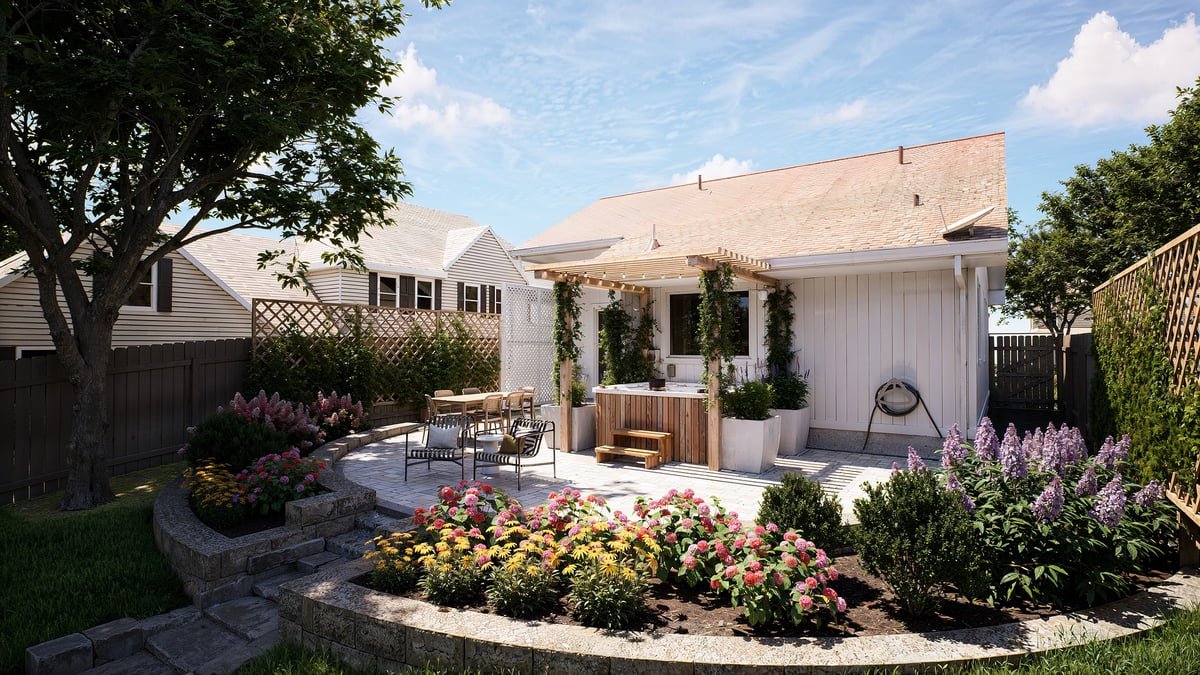
Pergolas transform unusable midday spaces into comfortable outdoor rooms. Proper design creates shade while allowing air circulation – essential when temperatures hit 96°F. The key lies in beam spacing and orientation.
East-west beam orientation provides maximum shade during peak afternoon hours when you need it most. Beam spacing between 12-16 inches creates 60-70% shade coverage – enough to reduce surface temperatures by 15-20°F while maintaining airflow. Tighter spacing creates a darker, stuffier space that defeats the purpose.
Post anchoring becomes critical in Westlake Hills' limestone terrain. Standard concrete footings often fail when expansive clay shifts around limestone bedrock. Kyle Stoutenger's preferred method involves drilling through limestone to solid bedrock, then setting posts with expanding anchor systems that mechanically lock into stone.
Our hardscaping services often integrate with pergola projects to create seamless outdoor living areas. Flagstone or travertine flooring beneath pergolas prevents mud during heavy rains while providing stable footing year-round.
Electrical integration requires careful planning for summer storms. GFCI-protected circuits and weatherproof fixtures ensure your pergola lighting and fans operate safely through severe weather. Conduit routing through posts during construction costs far less than retrofitting later.
Deck Construction That Survives Storms
Summer deck construction in Westlake Hills demands attention to drainage and structural anchoring. Flash flooding remains a constant threat, especially on sloped properties common throughout the area. Deck design must channel water away from foundations while providing emergency overflow capacity.
Joist spacing affects both structural integrity and cost. Standard 16-inch spacing works for most applications, but heavy furniture or hot tubs require 12-inch spacing for adequate support. Kyle Stoutenger has seen numerous deck failures where inadequate framing couldn't handle concentrated loads from outdoor kitchens or spa installations.
Ledger board attachment to houses creates the most common failure point. Lag bolts into rim joists provide adequate attachment for small decks, but larger structures require through-bolts with backing plates. This becomes especially critical where decks attach to pier-and-beam foundations common in older Westlake Hills homes.
Deck board selection impacts both appearance and maintenance requirements. Cedar decking requires annual cleaning and re-staining every 2-3 years. Composite decking eliminates staining but costs 40-60% more upfront and can become uncomfortably hot in direct summer sun.
Key Takeaway: Proper joist spacing and secure ledger attachment prevent deck failures, while material selection balances upfront costs with long-term maintenance requirements.
Casita Construction for Year-Round Use
Casitas extend living space outdoors while providing protection from severe weather. These small structures require more complex construction than pergolas but offer greater utility. Foundation requirements become critical for long-term performance.
Concrete slab foundations work best in Westlake Hills' mixed soil conditions. The combination of limestone bedrock and expansive clay creates differential settling that destroys pier foundations over time. A properly reinforced slab distributes loads evenly and resists moisture intrusion.
Electrical and plumbing integration requires permits in Travis County. Most casitas need at least 20-amp electrical service for lighting, outlets, and potential air conditioning. Plumbing rough-in during construction costs significantly less than retrofitting through finished walls later.
Insulation becomes essential for summer comfort when temperatures exceed 95°F. Spray foam insulation provides superior performance compared to fiberglass batts but increases project costs by 15-20%. The investment pays back through reduced cooling costs and improved comfort.
Our landscape design services often incorporate casitas as focal points within larger outdoor renovations. Proper siting maximizes privacy while taking advantage of prevailing breezes for natural cooling.
Privacy Screen Solutions
Privacy screens create intimate outdoor spaces while maintaining airflow – critical for summer comfort. Solid fences trap hot air and create uncomfortable microclimates. Strategic screen placement channels cooling breezes while blocking sight lines to neighboring properties.
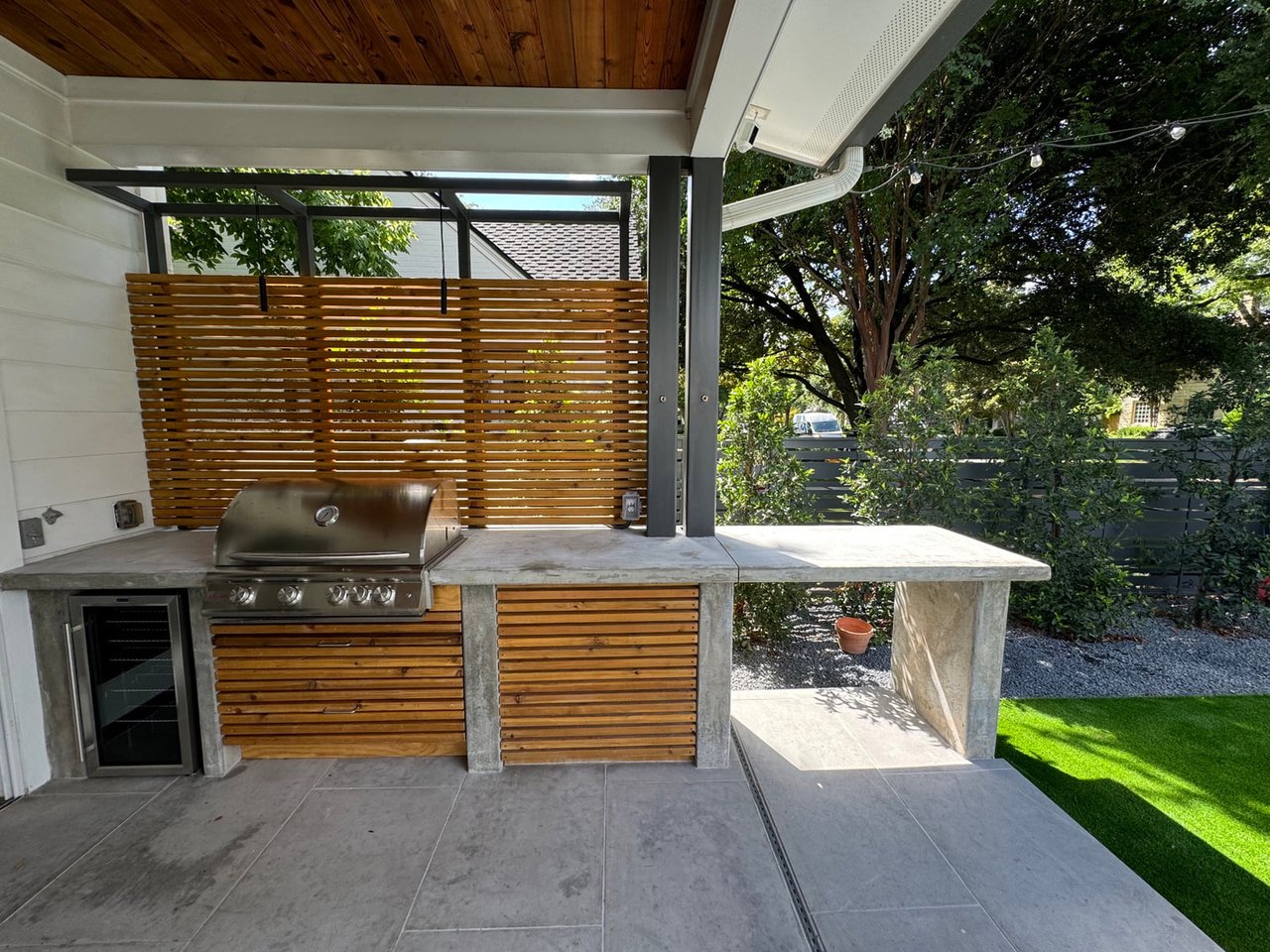
Horizontal slat designs provide the best combination of privacy and airflow. Slat spacing between 1-2 inches blocks most sight lines while allowing air movement. Angled slats increase privacy from above, important where neighboring houses sit on higher elevations.
Post installation follows the same principles as pergolas but requires closer spacing for wind resistance. Privacy screens catch more wind than open structures, creating higher stress loads on anchoring systems. Posts every 6-8 feet provide adequate support compared to 10-12 foot spacing for pergolas.
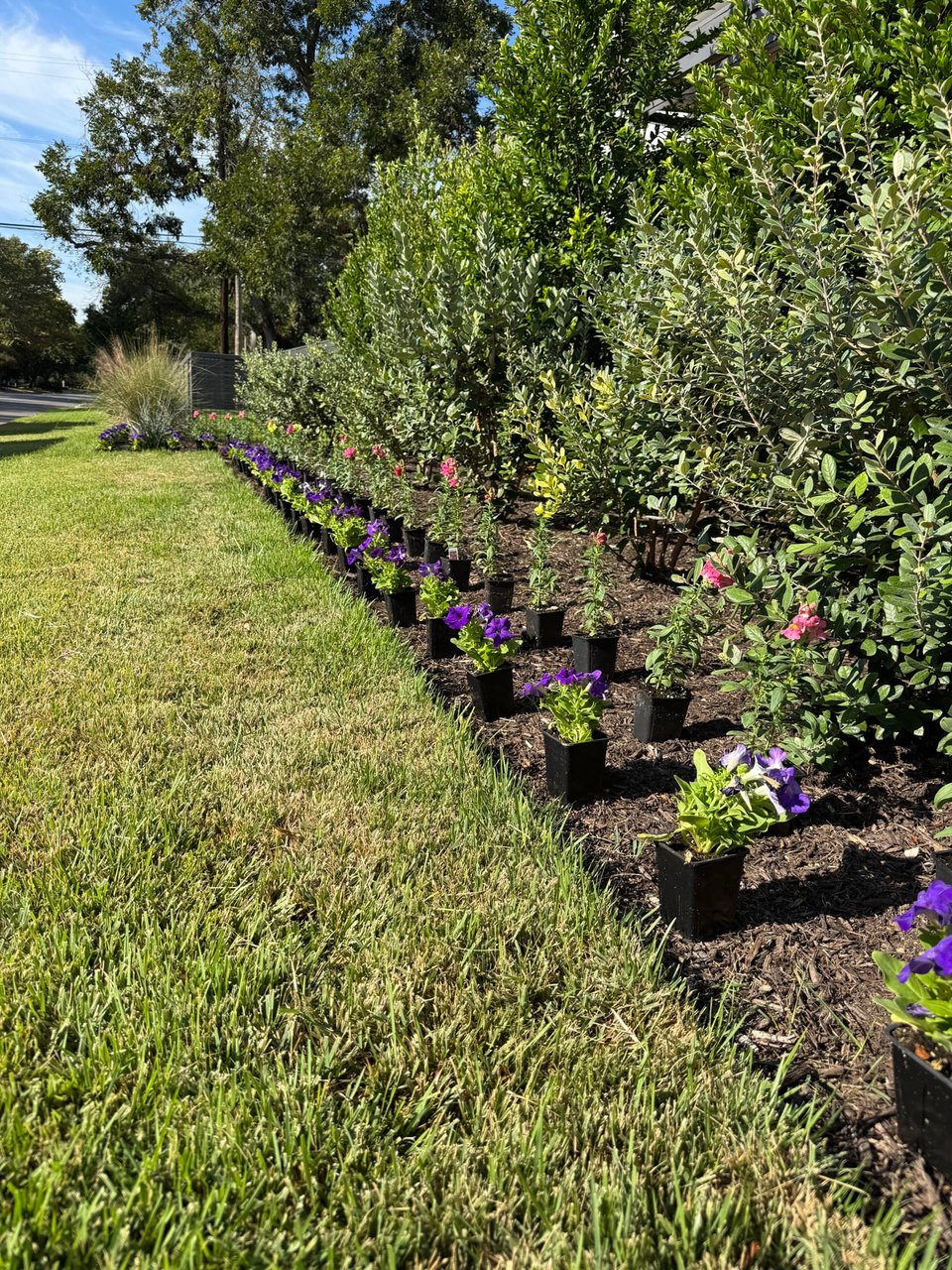
Integration with existing softscaping and planting creates layered privacy that improves over time. Native plants like Texas sage and flame acanthus provide screening at ground level while wooden screens handle upper sight lines.
Key Takeaway: Privacy screens require careful balance between sight blocking and airflow, with strategic placement and proper post spacing ensuring both comfort and structural integrity.
Custom Gates and Entry Features
Custom gates create impressive entrances while providing security and privacy. Gate construction demands precision engineering to ensure smooth operation despite Central Texas weather extremes. Temperature swings cause significant expansion and contraction in wooden gates.
Hardware selection becomes critical for long-term performance. Self-closing hinges prevent gates from remaining open during storms, while magnetic latches provide secure closure without complex mechanisms that jam with debris. Galvanized hardware resists corrosion better than painted alternatives.
Gate width affects structural requirements significantly. Single gates up to 4 feet wide operate reliably with standard hinge hardware. Wider gates require heavy-duty hinges and often benefit from wheel supports to prevent sagging over time.
Our metal fabrication services complement wooden gate construction with custom hardware and accent elements. Steel frames provide superior structural support for large gates while cedar panels maintain aesthetic appeal.
Automation integration requires professional electrical installation and permits in most cases. Electric gate operators need weather protection and backup power systems to function during storm-related outages.
Summer Installation Considerations
Summer construction in Westlake Hills requires careful scheduling around weather patterns. This week's forecast of severe thunderstorms demonstrates typical challenges. Heavy rain makes excavation difficult and delays concrete curing.
Morning installation hours maximize productivity before afternoon heat becomes dangerous. Starting work at 7 AM allows completion of heavy labor before temperatures climb above 90°F. Worker safety demands frequent breaks and adequate hydration during peak summer heat.
Material protection during installation prevents weather damage. Cedar lumber arrives kiln-dried and must stay that way until installation. Tarping materials during unexpected storms prevents moisture absorption that causes warping and splitting.
Kyle Stoutenger's experience shows that summer installations benefit from accelerated project schedules. Completing framing and roofing quickly protects materials from weather while allowing interior work to proceed regardless of conditions.
Tool performance suffers in extreme heat. Power tool batteries drain faster, and metal tools become uncomfortably hot to handle. Professional contractors adjust work schedules and equipment accordingly.
Maintenance for Longevity
Proper maintenance extends the life of custom carpentry structures significantly. Cedar requires annual cleaning to remove dirt and mildew that accumulate in our humid climate. Pressure washing works effectively but requires proper technique to avoid damaging wood fibers.
Staining schedules depend on exposure and wood condition. South-facing surfaces receive more UV damage and need re-staining every 2 years. Protected areas under roof overhangs may last 3-4 years between treatments.
Hardware inspection should occur twice yearly, especially after severe storm seasons. Loose bolts and shifting connections compromise structural integrity. Galvanized hardware shows corrosion signs after 5-7 years and needs replacement to maintain safety margins.
Our property management services include annual carpentry inspections as part of comprehensive landscape maintenance programs. Early detection of problems prevents costly repairs later.
Key Takeaway: Regular cleaning, staining, and hardware inspection maintain both appearance and structural integrity, with professional inspections catching problems before they become expensive repairs.
Integration with Complete Landscape Design
Custom carpentry works best as part of comprehensive landscape planning. Structures need proper drainage integration to prevent water damage during heavy rains. Our irrigation and drainage services ensure water flows away from wooden structures rather than pooling against foundations.
Lighting integration transforms carpentry projects into evening entertainment spaces. Our landscape lighting services provide both safety illumination and accent lighting that highlights architectural details.
Plant selection around wooden structures affects maintenance requirements. Aggressive vines can damage wood surfaces, while proper plant choices provide natural cooling and privacy enhancement. Native species like cedar elm and live oak complement wooden structures while thriving in Central Texas conditions.
According to the National Association of Landscape Professionals, quality landscaping delivers 100-200% return on investment, with custom structures adding significant value to outdoor living spaces.
Ready to create the custom carpentry project that transforms your Westlake Hills outdoor space? Outdoor Renovations brings the expertise and attention to detail that ensures your investment withstands Central Texas weather while providing years of enjoyment. Call Kyle Stoutenger at (512) 743-0570 to discuss your project and schedule a consultation. Our team is ready to turn your outdoor dreams into reality with structures built to last.
Custom Carpentry in Westlake Hills & Central Texas
Landscaping Services Near You
Frequently Asked Questions
What types of custom carpentry structures can you build in Westlake Hills?
We build pergolas, casitas, decks, custom fences, privacy screens, outdoor kitchens, and storage structures. Each project is designed for Central Texas weather conditions and built with premium materials suitable for our limestone and clay soil conditions.
How long do custom carpentry projects take in Westlake Hills?
Most pergolas take 2-4 days, decks require 3-7 days depending on size and complexity, and casitas typically take 1-2 weeks. Weather delays during summer storms can extend timelines by 1-3 days for safety reasons.
What wood species work best for outdoor carpentry in Central Texas?
Cedar is our top recommendation for Central Texas due to its natural resistance to insects and moisture. Ipe and other tropical hardwoods perform well but cost more. We avoid pine and other softwoods that deteriorate quickly in our climate.
Do I need permits for custom carpentry in Westlake Hills?
Most pergolas and decks under 200 square feet don't require permits in Travis County. Casitas and structures with electrical or plumbing always need permits. We handle all permit applications and inspections for qualifying projects.
How do you protect wooden structures from summer storms?
We use galvanized hardware rated for 150+ mph winds, proper post anchoring 30+ inches deep in limestone, and design roof structures to shed water quickly. All lumber is pre-treated and sealed before installation.
What's the maintenance schedule for outdoor carpentry in Westlake Hills?
Cedar structures need annual cleaning and re-staining every 2-3 years. Inspect hardware and connections twice yearly, especially after severe storms. We provide detailed maintenance guides and offer annual inspection services.
Need Landscaping Service in Austin?
Contact Outdoor Renovations today for custom carpentry services in Austin, TX.